If, like me, you consider yourself to be an artist, the prospect of ‘working in the arts’ can appear to be an attractive career path. In reality, it’s more likely to be an awful trap. You spend all of your time and energy facilitating or promoting other people’s ‘art’ while surrounding yourself with constant reminders that you don’t have the time or the space to make your own. It’s frustrating, and over time a creeping sense of panic fills your body. You realise you are becoming so tired of the art you’re facilitating that making art of your own is the last thing you want to do when you get home. You’re expected to give your life and soul to the cause and work for the smallest of monthly bank transfers… it’s okay though because you do get to wear your own clothes and you do get to tell your distant relatives that you ‘work in the arts’, which is like, cool or exciting or something?
I lied to myself for years and believed that what I was doing was cool and exciting… Right up until the point where my first child was born, a beautiful and timely gift from God: my daughter.
It took me an hour and a quarter, door to door, to get to my job in the arts. This meant that I left the house around 7:30 a.m. and didn’t get home until around 7:30 p.m. As the twelve-hour days passed, I began to miss her desperately. While I was away helping other people chase their dreams, I was missing out on the first few months of her life. I was tired, stressed, overworked, underpaid, and feeling increasingly homesick. I cried at the realisation that the situation I’d spent so many years working towards—full-time employment in the arts—was actually hurting me and my family.
Theo (who we met earlier) had been there with me, in ‘the arts,’ but he had managed to escape. He answered an advert in a shop window: “Gardener wanted for small gardening team.” After a few weeks in the job, it turned out that the advert had actually said “Gardeners” and there was another vacancy. This was my ticket out.
I didn’t mind the reduction in pay and hours—I’d be home by 4 p.m. at the latest each day. Anyway, my mother and my grandmother had just died, and I’d come into some money. This meant that I could afford to live on a low wage, topping it up from my inheritance while I worked just two days a week, and gradually built up some other side hustles to fit around my new job as a gardener. I’d always dreamed of doing manual work, being outside, using my body, and having a relationship with plants and the land instead of having to settle for a picture of the countryside as my desktop background. My dad is a keen gardener and collector of cacti and his dad was a gardener too and grew lots of food. This felt right.
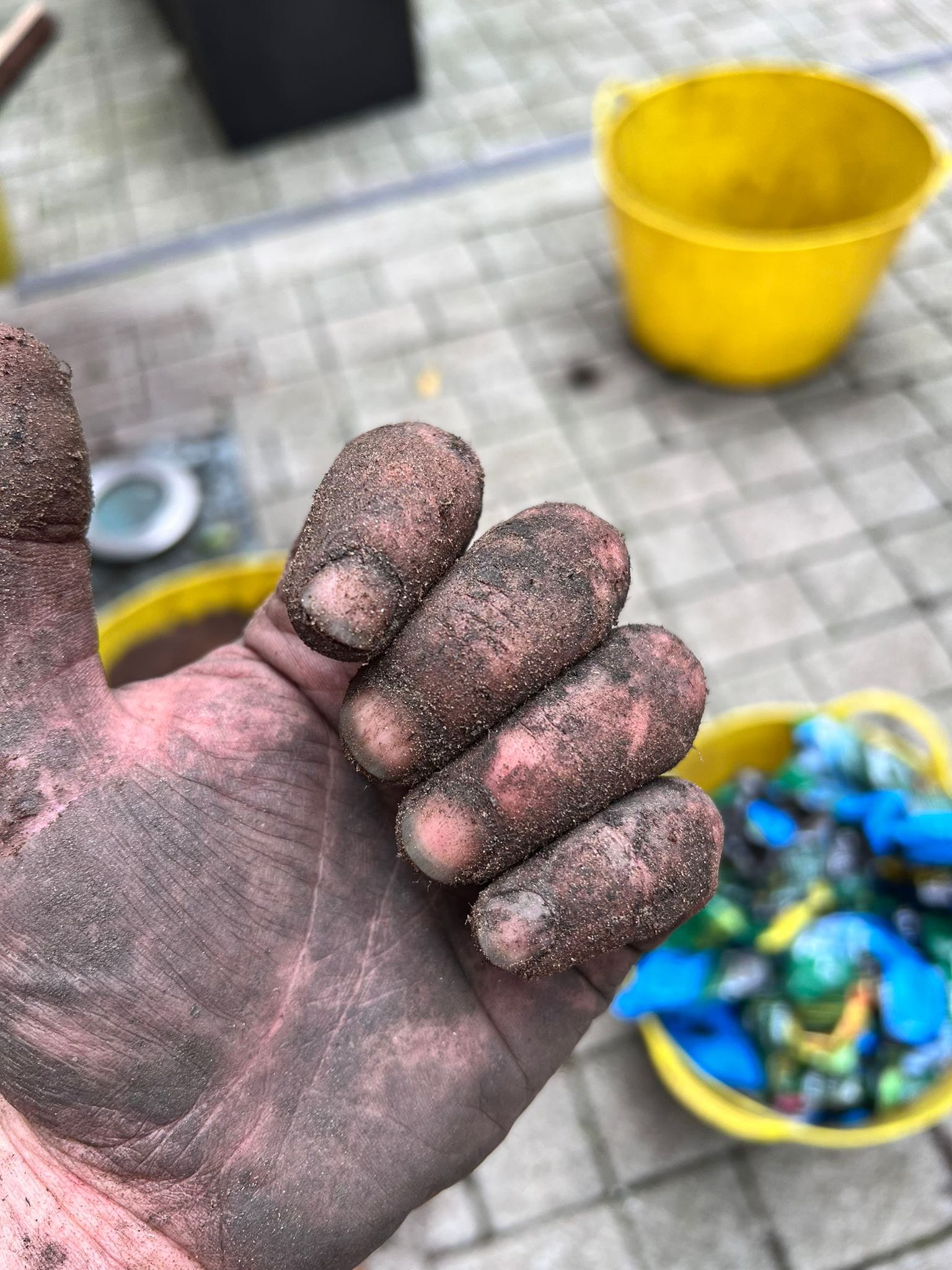
The freedom of being away from the chair and the screen, instead being outside all day, was like the moment you realise you can fly in a dream. I’d been released from the prison of buildings and put to work on the land. Despite the intense heat of summer with no shade, the deep, slow cold of winter, and the inescapable rain that penetrated my wet weather gear, soaking my underwear—I loved it. I loved cleaning the soil from under my fingernails each day. I bought myself a nailbrush. I remember being confused by the sight of one at the side of my Grandad Lowery’s sink when I was a little boy, not understanding the use for it. It all made sense now. I was getting my hands dirty… finally! I was learning about plants, using big scary machine tools, and building muscles in places I didn’t know existed.
After a few weeks my two-days-a-week turned into three and then, I also got insured to drive the van. One of my favourite parts of the day is the liminal space of driving between the jobs. I work in Norfolk and our countryside is lush and green or flat and open — connected by B-roads, free from too many other vehicles. Once a week or so I get to drive for over an hour, just listening to music and enjoying the scenery. Sometimes I like to chart a new route between the sites and purposely drive down an unfamiliar road, not knowing exactly where it leads or where I’ll end up. Building up my internal maps.
Yesterday I drove from Horning to Coltishall along the B1354. Just before I reached my destination, I drove past a large, open patch of grass by the River Bure on my left. In the summer, the space is filled with sunbathers and ice cream eaters, but in autumn, the sunbathers turn into just one or two dog walkers. As I drove past, I saw an elderly couple walking across the grass parallel to the river. In my head it was my Grandma and Grandad Mitchell—my mother’s parents, who are both now dead, but that didn’t matter—it was them, they were there. I have a memory of being there with them in the past, and so somehow it made sense that they could be there now. This was just one of the places that they were still able to visit. I didn’t see their faces. I didn’t need to. It was just nice knowing that they were doing something peaceful together as ghosts. They had spent their last living years together in Sheringham, a lovely little town by the sea on the North Norfolk coast. I spent a lot of time there too, especially as my mum stayed there for a while when she left us in Ormesby.