The Heuberg

Part 1

Barry and Enid moved from Wanstead in east London to retire in Sheringham in the late 1980s. They bought a large, blue, three-story townhouse on Montague Road. The house came with the name ‘The Heuberg’, which I have just discovered is one of the hills outside Salzburg—forming part of the Alpine backdrop for the opening scenes of The Sound of Music. This map jump from Sheringham to Austria is unexpected, but the image of Maria spinning open-armed on the mountain top captures the wonder and excitement I felt getting to explore that vast house as a child.

The Heuberg was grand and large, with two front doors, a wide entrance lobby, two reception rooms—the posh room and the family room—two dining rooms, and two staircases; a wide, grand flight leading up from the entrance lobby and a dark, thin one leading up out of the back kitchen for the ghosts of the maids. Their old alarm box was still up on the wall of one of the dining rooms. On the upper two floors, six or seven bedrooms and a self-contained flat ‘up the top’.

My sister and I would spend a week or two at The Heuberg during various summer holidays from school. It always felt like we were staying in a hotel, except it belonged to our family. We got to pick our bedrooms for the week. I would pretend I lived there and Grandma would play the part of the maid—climbing the back stairs in the morning carrying trays balanced with cups of tea and marmite on toast—breakfast in bed—running us baths and spoiling us with fuss and care. I loved having my own bedroom there and remember how clean the bedsheets always felt. I had always wished that I could have been Barry and Enid’s son and that those sheets felt normal instead of a treat.

No-one ever spent much time in the posh living room after Grandma had it done up. It was all a peachy colour and it had nice new sofas that matched the walls and the carpet – you could run your hands over the fabric on those sofas brushing it the wrong way to draw pictures or write words in it. The room was always very quiet, calm and tidy. I liked to be in there. Sometimes there were lots of other family members in the house and it could get noisy and hectic - I liked the quiet.

The family room had the telly, older sofas with tassels around the edges of the cushions and the old Boyd-London baby grand piano. I remember picking out melodies on the piano and impressing my grandparents with my ‘good ear’ for it. Grandad had his chair in the corner of the room facing the telly. A harder, tall-backed chair that made you sit up straight. Beside it were racks filled with his newspapers with completed crosswords.

He was a calm, gentle and sensible man, quietly old-fashioned, and my mum and her sisters would sometimes make fun of him for it. Before he had retired he had held high-ranking positions in the metropolitan police and the social services in London after leading a group of soldiers in Burma as an officer during the Second World War. He and my grandma were lifelong Salvation Army goers and when we stayed with them we went too. Grandad played the tuba in the band, or, as he called it - the Bass. He provided the Bass in the band and was the base of the family. He had worked hard his whole life and had always been careful with the money that he had earned. Part of that money ended up helping to buy the house I live in now. Enid, my Grandma had been the caregiver and the homemaker. She made up for Grandad’s frugal nature with her generosity; she loved to share the money that he had earned and loved to save.

At the far end of the entrance lobby was a doorway to the back of the house where the kitchen and dining rooms were - this was the door that Enid would always emerge from when you arrived at the house, wiping her flour-covered hands on a pinafore before gently holding your face and plastering it with numerous tiny kisses, telling you how lovely it was to see you.

She was a lovely woman, stylish and glamorous in her own unique way and most importantly to me – an incredible grandma – the best any child could have wished for. Warm, fussy, sweet and caring. She always had time for you, or anyone for that matter. When you were out in public with her she would never fail to strike up a conversation with a stranger who happened to be sitting nearby, proceeding to proudly tell them all about her family, which was large. Barry and Enid had produced five children. One of which was my mum, but I’m not ready to talk about her yet.

After dinner Grandad would always take me for a walk ‘around the block’. Turning right out of the front door we would race down North Street and despite his old age he would always win. We took a left down The Boulevard past the house, where according to the blue plaque, ‘Ralph Vaughan Williams’ had once lived, following the path through the middle of the roundabout with its well-kept flower beds, up and over The Esplanade and through the stone archway that framed the glorious view of the North Sea. We would take the steep slope down to the right and then walk hand in hand along the promenade with the sea on our left - long before the days of the large Norwegian boulders that litter the Sheringham beaches now, in defence against the North Sea waves.
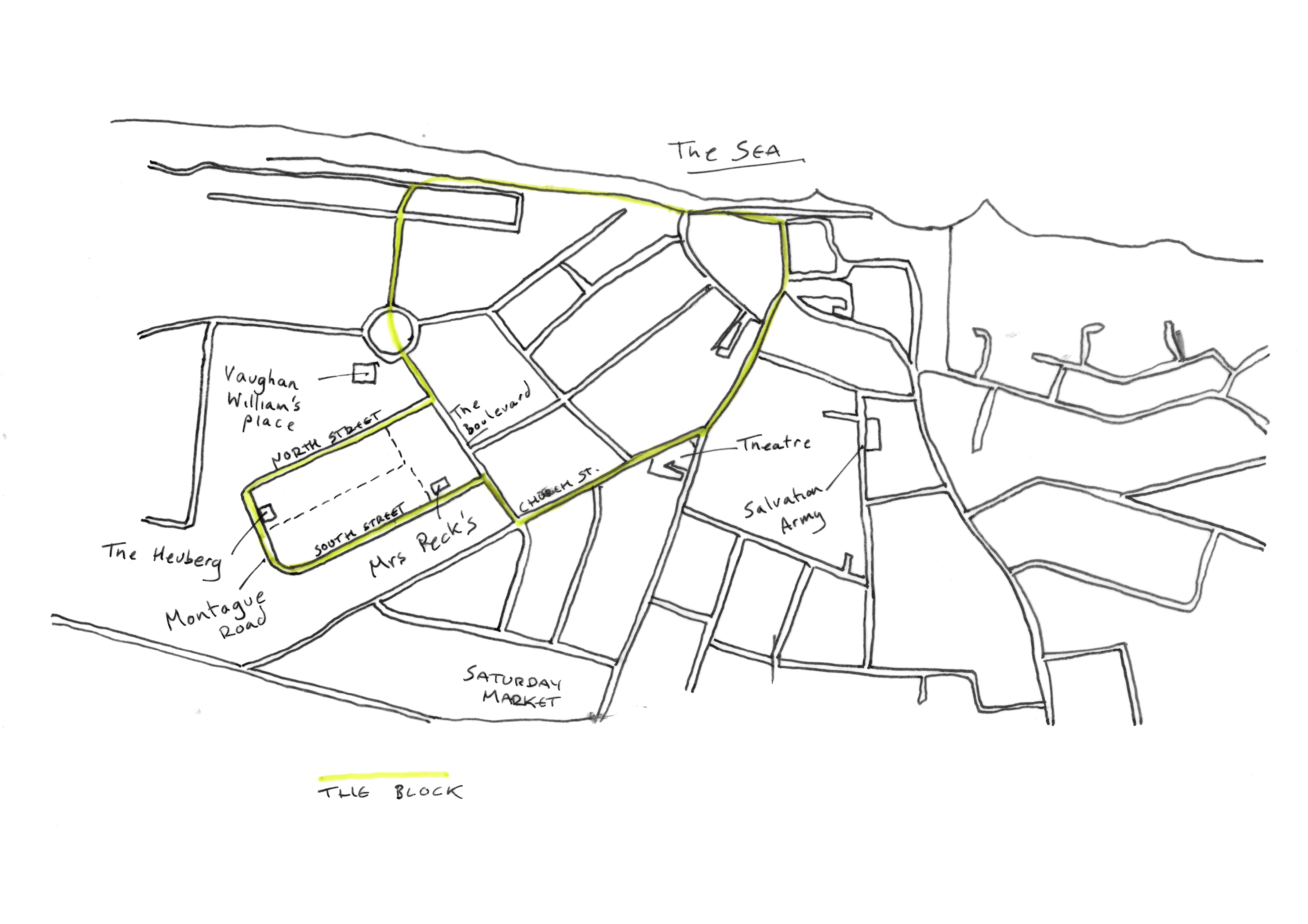
Along the way Grandad would point out various bits of local history, like the place where the wreck of the Ispolen - a Norwegian barque that had wrecked on the beach in 1897 would occasionally be revealed or the old lifeboat station where the boat that rescued the crew would have launched from. We would follow The Promenade until it joined up with the High Street where we would turn right and walk back through the town. Taking the right fork at the little theatre to follow Church Street back to the other end of The Boulevard then taking a left into South Street and on and back up to Montague Road and the Heuberg, completing the loop. Grandad was full of stories - like the legendary ‘Jonny and the jelly’ along with anecdotes from his days in the war, like the one about the man he had met in the jungle who could talk to snakes. There always seemed to be a moral or lesson to be learned from the stories he told. They were often fantastical but he would assure you with a wink they were real and true. He was a deliberate and thoughtful man. He was also a Freemason and he had a mysterious, magical and secretive side to him.

My mum had escaped to Sheringham and the security of The Heuberg after she left my sister and I with my Dad in Ormesby. The self contained flat on the second floor had been hers while she had found herself somewhere more permanent to live. We didn’t often go ‘up the top’ (as grandma referred to it) and whilst it wasn’t out of bounds (nowhere was) it was a few degrees colder than the rest of the house, had mismatched 70s-era furniture and felt a little too far away from the comfort and safety that my grandparents provided us.

When my mum was living up there I had somehow knocked over and smashed a mirror that was resting behind the taps on the bathroom sink - tiny glass shards had filled the sink and covered the floor around it. My mum told me that I would need to own up and immediately sent me downstairs to the kitchen to explain to Grandma what I had done. Grandma wasn’t annoyed with me and immediately took the blame for having put the mirror in a place that wasn’t very safe. She did her best to remove the guilt that my mum had made me carry down the stairs. I still felt bad and in my head, I knew that this had doomed me to years of bad luck.

Fucking hell the breaks in the concentration needed to write this stuff are excruciating. My two year old son can be unbelievably difficult and annoying, even now when I’m meant to have a moment to myself to do this. This is my issue, not his, and it’s something I am trying to address through this work I am doing. I hope to write myself into a place where I can deal with him better and not cause him a childhood filled with guilt and trauma, like mine. It’s really one of the main fuels for this journey – to be a better parent – but I’m getting ahead of myself… where was I?

To be continued…
Finding roots between the jobs

If, like me, you consider yourself to be an artist, the prospect of ‘working in the arts’ can appear to be an attractive career path. In reality, it’s more likely to be an awful trap. You spend all of your time and energy facilitating or promoting other people’s ‘art’ while surrounding yourself with constant reminders that you don’t have the time or the space to make your own. It’s frustrating, and over time a creeping sense of panic fills your body. You realise you are becoming so tired of the art you’re facilitating that making art of your own is the last thing you want to do when you get home. You’re expected to give your life and soul to the cause and work for the smallest of monthly bank transfers… it’s okay though because you do get to wear your own clothes and you do get to tell your distant relatives that you ‘work in the arts’, which is like, cool or exciting or something?

I lied to myself for years and believed that what I was doing was cool and exciting… Right up until the point where my first child was born, a beautiful and timely gift from God: my daughter.

It took me an hour and a quarter, door to door, to get to my job in the arts. This meant that I left the house around 7:30 a.m. and didn’t get home until around 7:30 p.m. As the twelve-hour days passed, I began to miss her desperately. While I was away helping other people chase their dreams, I was missing out on the first few months of her life. I was tired, stressed, overworked, underpaid, and feeling increasingly homesick. I cried at the realisation that the situation I’d spent so many years working towards—full-time employment in the arts—was actually hurting me and my family.

Theo (who we met earlier) had been there with me, in ‘the arts,’ but he had managed to escape. He answered an advert in a shop window: “Gardener wanted for small gardening team.” After a few weeks in the job, it turned out that the advert had actually said “Gardeners” and there was another vacancy. This was my ticket out.

I didn’t mind the reduction in pay and hours—I’d be home by 4 p.m. at the latest each day. Anyway, my mother and my grandmother had just died, and I’d come into some money. This meant that I could afford to live on a low wage, topping it up from my inheritance while I worked just two days a week, and gradually built up some other side hustles to fit around my new job as a gardener. I’d always dreamed of doing manual work, being outside, using my body, and having a relationship with plants and the land instead of having to settle for a picture of the countryside as my desktop background. My dad is a keen gardener and collector of cacti and his dad was a gardener too and grew lots of food. This felt right.

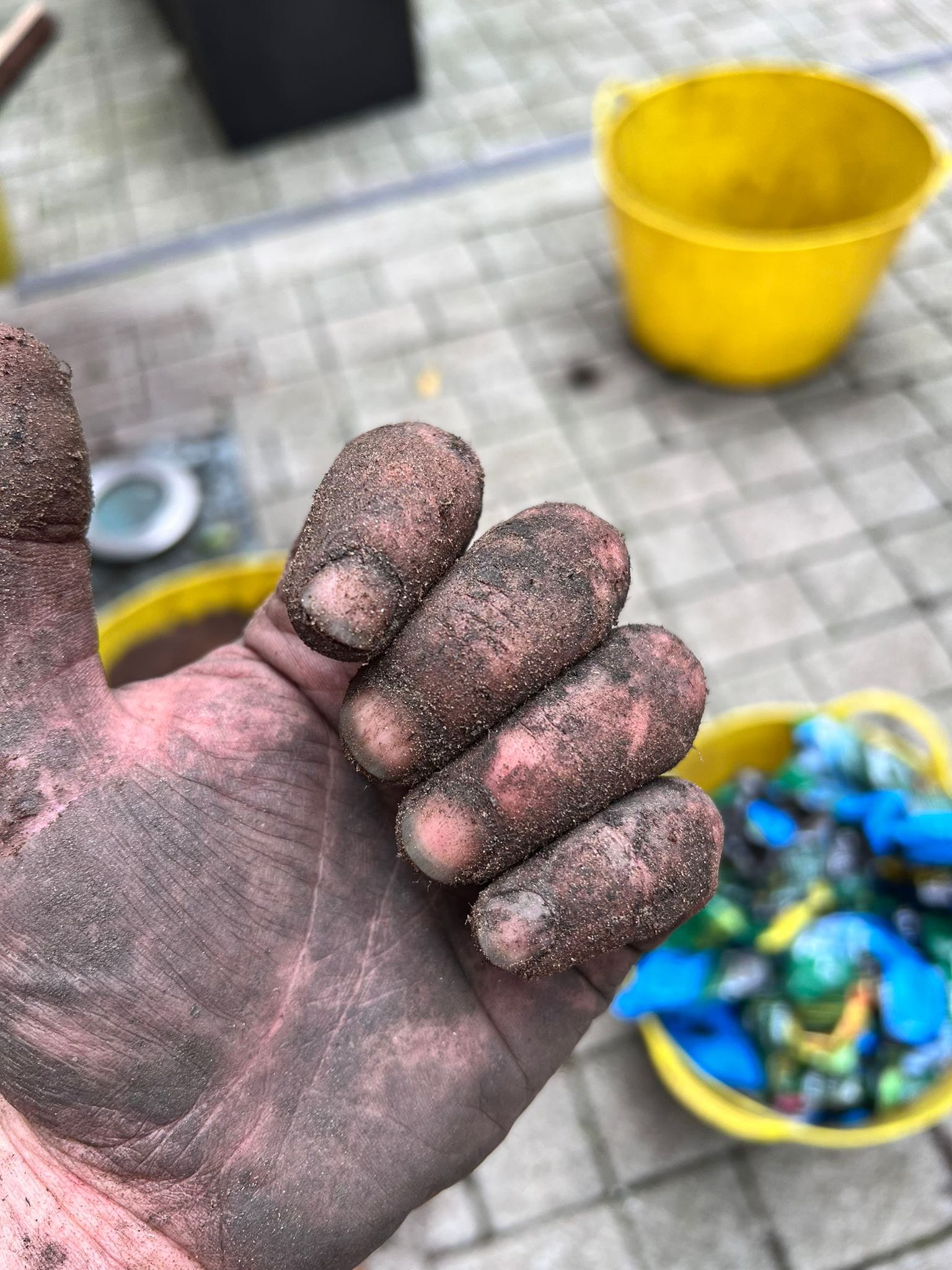
The freedom of being away from the chair and the screen, instead being outside all day, was like the moment you realise you can fly in a dream. I’d been released from the prison of buildings and put to work on the land. Despite the intense heat of summer with no shade, the deep, slow cold of winter, and the inescapable rain that penetrated my wet weather gear, soaking my underwear—I loved it. I loved cleaning the soil from under my fingernails each day. I bought myself a nailbrush. I remember being confused by the sight of one at the side of my Grandad Lowery’s sink when I was a little boy, not understanding the use for it. It all made sense now. I was getting my hands dirty… finally! I was learning about plants, using big scary machine tools, and building muscles in places I didn’t know existed.

After a few weeks my two-days-a-week turned into three and then, I also got insured to drive the van. One of my favourite parts of the day is the liminal space of driving between the jobs. I work in Norfolk and our countryside is lush and green or flat and open — connected by B-roads, free from too many other vehicles. Once a week or so I get to drive for over an hour, just listening to music and enjoying the scenery. Sometimes I like to chart a new route between the sites and purposely drive down an unfamiliar road, not knowing exactly where it leads or where I’ll end up. Building up my internal maps.

Yesterday I drove from Horning to Coltishall along the B1354. Just before I reached my destination, I drove past a large, open patch of grass by the River Bure on my left. In the summer, the space is filled with sunbathers and ice cream eaters, but in autumn, the sunbathers turn into just one or two dog walkers. As I drove past, I saw an elderly couple walking across the grass parallel to the river. In my head it was my Grandma and Grandad Mitchell—my mother’s parents, who are both now dead, but that didn’t matter—it was them, they were there. I have a memory of being there with them in the past, and so somehow it made sense that they could be there now. This was just one of the places that they were still able to visit. I didn’t see their faces. I didn’t need to. It was just nice knowing that they were doing something peaceful together as ghosts. They had spent their last living years together in Sheringham, a lovely little town by the sea on the North Norfolk coast. I spent a lot of time there too, especially as my mum stayed there for a while when she left us in Ormesby.

I Walked My Seven-Year-Old Self To School And Back

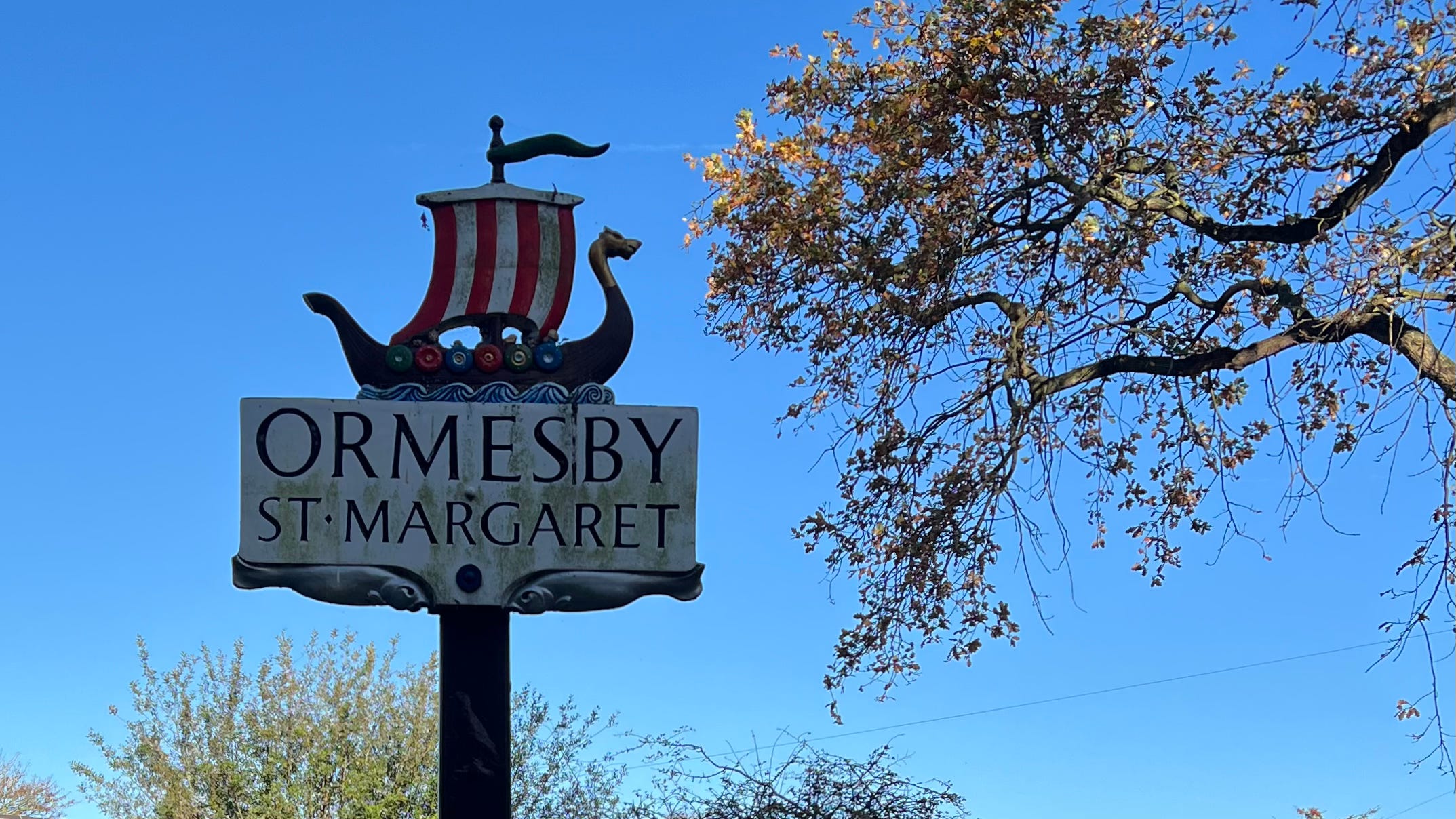
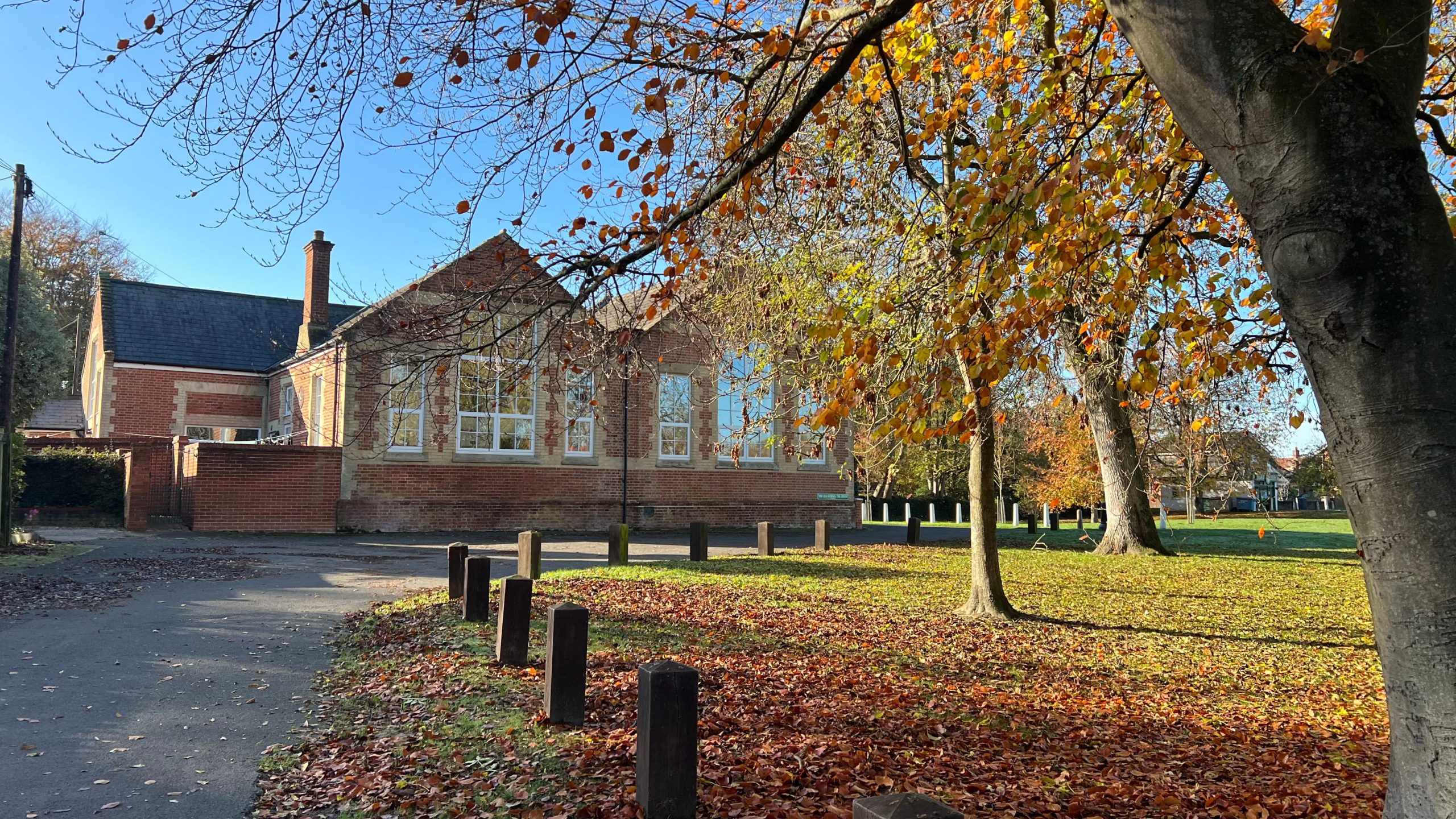
As a part of this project I have been thinking about capturing audio recordings at the locations where some key memories took place. Having completed my second piece of writing, which took me back to Ormesby St. Margaret and the first school I attended in Norfolk, I decided that Ormesby was the place to make the first of these recordings. Today was a Sunday, the 9th of November 2025 and It felt like the right time to go and visit, to make an audio recording and take a few photos of my old school.

We had moved to Ormesby in Norfolk from Braintree in Essex. I must have been four or five when I was stuffed into the back of the car with a bunch of other things that were too delicate for the removal van, like my dad’s most precious cacti, and the cat. We left No. 2 Achilles Way in Braintree and headed for our new home at 61 Yarmouth Road, Ormesby St. Margaret, Norfolk. Little did we know that our lives would fall apart in that house. There were ghosts there and we woke them up with the unhappiness we brought to the place.

Forty years later I got in my car, plugged in my phone and my seatbelt and set off, taking the scenic route, swapping the busy A47 for a calmer journey through little villages and open fields. I found myself listening to music that my dad used to play in his car. First up - Camel. I flicked through their 1979 album ‘I can see your house from here’ but it wasn’t feeling quite right and so a few miles down the road I switched to The Pet Shop Boys’ debut album ‘Please’ - released in March 1986, right around the time of my first journey to Ormesby - this felt much better. I remembered the album soundtracking numerous journeys with me sat in the front passenger seat of my dad’s car.

As I drove down the winding roads that cut through the east Norfolk farmlands I began to speak aloud to an invisible seven year old boy sat in my passenger seat. The closer I got to Ormesby the more the trip seemed to become about him and less about me and my ‘art project’. I asked him what he would like to do when we got there and together we agreed that I would walk him from the old house to the school and back home again.

As we drove into the village there was a small group of people gathering around the war memorial and I realised that it was Remembrance Sunday! - How strange, I thought… I am here today to think about the past and remember, too. I drove on through the village, down the main Yarmouth road and parked up in a little lay-by just a few metres away from my old house. I got out of the car, plugged in a set of headphones that had an inbuilt microphone and hit record on the sound recorder app to capture the visit as a piece of audio.

The front of the house is a little obscured by overgrown trees but the building is still visible from the entrance to the driveway. The windows have been changed, as has the front door. The slate garage that blew down in the storms of October ’87 has been replaced with a much more flimsy wooden shed. I looked up to see my old bedroom window and remembered the large ammonite fossil that I found on a beach and had proudly displayed on my chest of drawers. I looked at the living room window to the left of the front door and remembered the floral couch where I would lay with my dad watching scary films that I was far too young for. The windows to the right of the front door looked into where my dad had ‘his room’ with his gardening books and his record and tape collection. I used to listen to music in that room too. There was a large coffin-like freezer in that room for a while - I remember climbing on top of it and leaping off into the air each time the chorus of Michael Jackson’s Thriller kicked in.

I didn’t want to hang around outside the front of the house for too long in case the current owners saw me and felt concerned by a strange man or the ghost of a child studying their home. On the way here I had rehearsed in my mind the idea of knocking on the door and explaining that I had lived here as a young boy and asking the current occupants if I could have a look around to see what details of my time there remained intact… but, it’s 2025 and I’m not in a film so instead, me and my seven year old self set off on foot into the village to find the school.

The road into the village is a main one and the cars are close and loud - I’m aware they might spoil my audio recording as I begin to speak quietly into the microphone. I told the seven year old boy about a memory of a nearby pond and the ducks who used to visit our front garden. We found the pond a minute or so down the road - it was swamped with reeds now, seemed bigger and further set back from the road than I had remembered, but it was still there. A new family of birds lived there now - you can hear them on the audio recording I’m sure. We passed the village church where I had once taken part in a harvest festival with my school. I noticed the blue clock at the top of the tower read 10:35 and I was pleased to see that the time was correct and the clock was still working. We passed an old lady and seven year old me stopped talking so she didn’t think he was strange. She wished us a good morning and gave us a lovely smile as if she recognised us both as locals. We passed the house where the argument over the bobble hat had taken place and became aware of the knot in our stomach. “Is this the house?” I said. “I think this is the house,” he said.

As we got into the centre of the village a larger group of people had congregated around the war memorial. It was 10:40 and they were all here waiting for 11:00. We gave them a wide berth and circled around the patch of grass where they had gathered, after I briefly nipped into the petrol station to use the loo that I was very relieved to find. We made our way over the road to the bottom of the driveway that led up to the school and I started to take photos. The road sign read ‘Private Road, Residents Only’.

The old school was still a familiar shape, although the windows had been renewed and the bricks cleaned up. I walked around the outside of the building and noticed gardens, car parks and the new houses where the playground had once been. I explored a bit and looked for signs of the past but most things had been changed or made new. The playground had gone, the outside toilets were gone, the dinner hall block was gone, the lunchboxes and all the other children, gone.

I think he must have gone inside to look around what remained of the old school while I walked onto the field towards the swings of the playground. There was an old metal bench with a plaque commemorating the jubilee years - long before we had lived here. I took out another more professional audio recording device from my bag, set it down on the arm of the bench and hit record. I wandered off and left it recording while I explored the park a little more, trying to remain silent. In the distance the faint sound of a trumpet playing the last post let me know the time. I was silent for a good few minutes after that - deep in remembrance.

I wasn’t sure exactly what it was that I was recording with the audio recorder that I’d left on the park bench. The birds? The cars? The distant trumpet? The distinct lack of school children now the school had become houses? Not much was happening and so instead of the ten minutes I had planned to capture I pressed stop a few minutes early. At this moment the original idea that had first inspired me to come back here seemed a bit pointless now. I walked back to the school and waited for my younger self to come out and join me.

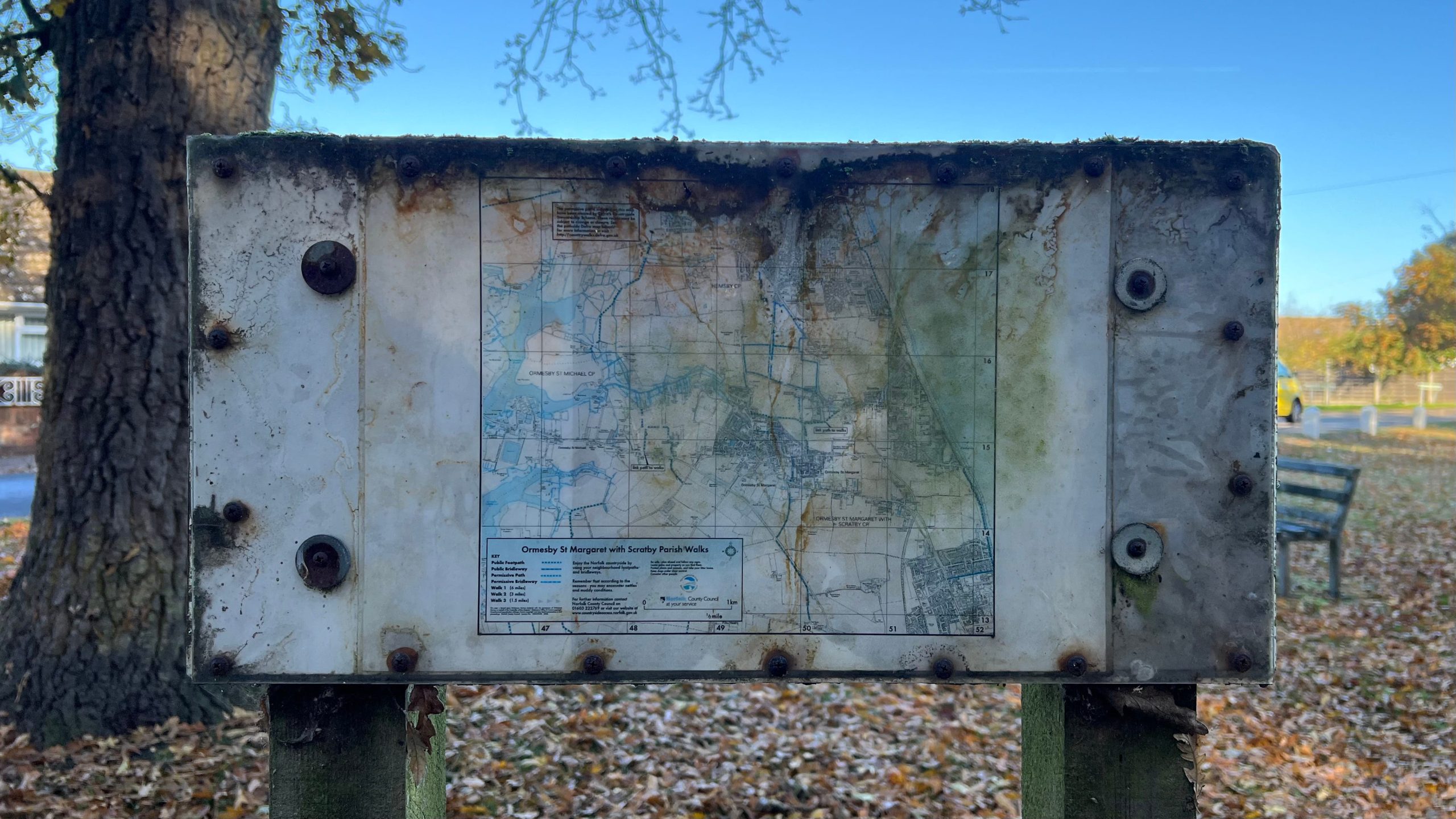
We set off back towards the old house. The large group of people on the green had shrunk to a duo - two men deep in conversation, heads slightly bowed as if they were looking for something they had lost in the grass. As I got closer I noticed a section of map was displayed on a sign post. It showed the local area in closer detail than the maps that I had been collecting. It was old and mouldy and stained with rain but It looked beautiful and I took a number of photos of it. We reached the war memorial and then he elbowed me in my side and nodded his head and so I read out the list of names carved into the stone monument along with the roles they had performed during their service. He stood by my side and listened.

As we walked back down the road I once again acknowledged the house where the argument over the bobble hat had taken place - I took off my backpack and withdrew a new hat that my wife had bought me for my last birthday, pulled it onto my head and said, “This one is definitely mine. My wife bought it for me as a birthday present. It doesn’t have a bobble, and it’s blue rather than grey, but it’s mine—and no one is going to tell me otherwise”. Seven year old me was happy and we both shared a smile and carried on down the road together.

When we reached the church, he suggested we go in and look around the graveyard. It was new territory for us both, something we had never done before. As we walked up the slope I noticed through the windows of the church that there were people sat in the pews; a remembrance service was taking place at that very moment. No one saw us and so we carried on exploring. I quickly became aware that this was no small burial ground, it was vast and went back a long way. We discovered a large tomb half-buried in the ground - it housed members of the local Lacons family who I assumed to be the wealthy land owners of the village. The tomb was marked with a symbol of a falcon, standing proud over the palm of a hand—a family emblem perhaps? At this moment, for some reason, we decided to turn around and make our way back to the road, rather than exploring the graveyard any further. I wondered whether the ghosts of the soldiers carved into the war memorial had made their way back to Ormesby or had gravestones here.

As I got closer to the church I heard music — the congregation was singing. After a few seconds I recognised the piece of music and tears began to flow. It was a hymn called ‘Make Me A Channel Of Your Peace.’ “That’s amazing!” I whispered. This piece of music is very special to me - it was my grandmother’s favourite hymn and I had intentionally sought it out in the last year as a way to connect with her memory. And here it was - it felt like a gift from the ghost of my younger self who somehow knew to guide me into the graveyard and then turn me around at the exact right moment to be close enough to the church so I could hear it being sung. I walked around to the front of the church and sat down on the bench in the entrance to be as close to the music and as far away from the noise of the passing cars as possible. It was truly a beautiful and magical moment and I thanked God, Grandma, and the little boy sat beside me for this beautiful moment we had all shared together.

As we leave the churchyard we feel happy and at peace. The sun is bright and the leaves on the trees are rich with the colours of autumn. It’s time to take this kid home. The house isn’t much further down the road. We pass the pond and the family of ducks and the row of houses where we once lived comes into view - I hold out my left hand and offer to hold his right. His hand is the perfect size to sit perfectly in mine and I lead him up the road to the end of our driveway, release his hand from mine and tell him “Here you go, mate. We’re home. You can go in there... (Is that 61?) You go in. 61.”

As I watch the little boy walk off behind the overgrown trees at the front of the house I notice the next door neighbours pulling into their driveway - they look at me and their eyes ask what I’m doing. It’s time to go and I turn around and walk the few metres back to my car. I look at my phone and notice the recording time - 59:40 - I comment on how much I’ve enjoyed doing this and say thanks out loud as the counter reaches 60:00 and I stop the recording before getting back into my car alone.

Bricks, Hats & Knots

As I walk in I become very aware that I’m wearing my filthy work clothes — my mud-stained, (previously waterproof) high-vis jacket and my dirty work boots. The cafe is filled with well dressed people, sat alone at small tables, staring into laptop screens. Even though no-one seems to care or even really notice that I am here, I feel out of place. I tread carefully through the forest of freelancers and escape through the door in the far corner of the room to the gents’. The smell of piss soaked bricks and the strong chemicals used to mask them hits hard and instantly takes me back to the boys’ toilets at that school on the green, in Ormesby St. Margaret ~ 1987.

When I was at school here there were boys’ toilets outside, behind a wall at the edge of the playground. No urinals, no roof, just a brick wall to piss on and a gutter to guide it all into the drain. I remember competitions with the other boys to see whose stream could reach the highest up the wall. The courses of bricks and the climbing rows of grout markers made a perfect piss’o’meter, creating a challenge none of us could resist. Thankfully, none of us ever made it over the wall, no matter how hard we tried. We didn’t drink as much in the 80s so we never had a full tank.

There was always a feeling of unease, a tinge of sadness, mild fear and loneliness here for me at this school. My mum had applied for a job here once and I remember being questioned by her as to whether I’d ‘said something’ to the teachers when she found out she didn’t get it. My boastful pride at the idea of my mum working at the school had apparently backfired and I ended up shouldering the blame for her unsuccessful application. I remember the noisy dinner hall and the off-putting stench of a hundred lunchboxes all open at the same time. I remember the kid whose mum packed his lunchbox so full that he could never finish eating in time to run around the playground with the rest of us before the bell called us back to the classrooms. I remember my mum asking ‘how would you feel if your dad and I split up’ and the response I gave that tried to shield her from feeling any of that awful guilt ‘I don’t know… It’s up to you I guess’…

I remember running my hands along the rough red bricks of the walls in the playground so that my skin felt unusually soft to the touch when I could no longer bear the sensation. I remember feeling tired, and longing for the bell to ring to mark the end of the school day. All the kids piling out with their shirts half untucked and their shoelaces half-tied. All eyes searching for a familiar shape of mum.

After a while in Ormesby it wasn’t my mum who picked me up, it was someone else’s. My mum had moved away and taken with her my sense of home. I still lived in the same house with my dad and my younger sister, but now we had a new mum who had arrived with a new sister and a new brother for us, new rules and routines for the house and a new focus for my dad’s attention. Everything had changed. The house had more people in it but I’d never felt more alone. Never again was I allowed to stay up late watching grown-up films with my dad, lying on the sofa with him to inevitably fall asleep in his arms and magically wake up in my bed upstairs in the morning. I didn’t get to feel special anymore. I was just ‘one of the kids’ and the kids had to go to bed early.

There was a grey and red bobble hat. It used to keep me warm on the cold days before my mum had left and before they had all arrived. One day, the hat turned into an argument between me and the new brother. He said it was his. I knew it was mine. The new mum ended the argument and declared the hat was his and always had been, and that, was the end of that. In that moment a knot twisted up so tightly inside of me that it’s still tied today.

The sound of a crappy hand dryer brought me back to the gents’ and I was reminded that this place used to be a pub and that these toilets would have been used by drunk men who, from the smell of it, had wondered how far up these walls their piss could reach. A few years ago this place was turned into a cafe and now instead of being filled with tables of men in grubby work clothes and dirty work boots drinking beer together, it’s filled with freelancers, sat mostly alone and dressed in clean clothes and nice shoes, staring not into pints, but into screens. A few more years before that my beautiful old school on the green got turned into houses and they built a bunch of new ones where the playground used to be. While I waited for my overpriced takeaway coffee I wondered if they had repurposed any of those old bricks from the playground to build the new houses? And if they did, I wondered if the walls of those houses remember the games we used to play against them.

I wonder if my mum is waiting there for me now?

Maybe she’s brought my hat…

A Sound, a place and a feeling

As the van came to a stop outside Theo’s house and he began to collect his gardening tools together, I found myself by the seaside — looking out at rock pools from a promenade, aged around seven years old. A vivid memory triggered by the music that I was playing in the van to soundtrack our trip home. I’d been listening to John Adams for most of the day… most of the week come to think of it, and I’d been enjoying the space that his music left for my thoughts. That music and that memory hadn’t been connected until that moment, but something about the way the music was making me feel took me back to that place on the north-east coast of England where I had once stood, deep in the past. I could hear the seagulls overhead and taste the cool salty air on my lips.

Theo was talking to me as he was gathering his things and whilst I tried to remain present and polite, I wasn’t really there. I wiped the sea spray from my forehead and managed to say goodbye to him before he shut the door. I drove myself home with John Adams still providing the soundtrack and fully immersed myself in the sound, the place and the feeling. I was becoming aware of a new ability that would allow me to transport myself fully and instantly to different times and places at will — like those rock pools that I had carefully clambered over as a child, or other similar power-places that hummed the right tune. A powerful realisation of who I was and who I am washed over me - an instant unpeeling of the layers of whatever it was that had caused me to forget. I felt happy and excited and full of wonder.

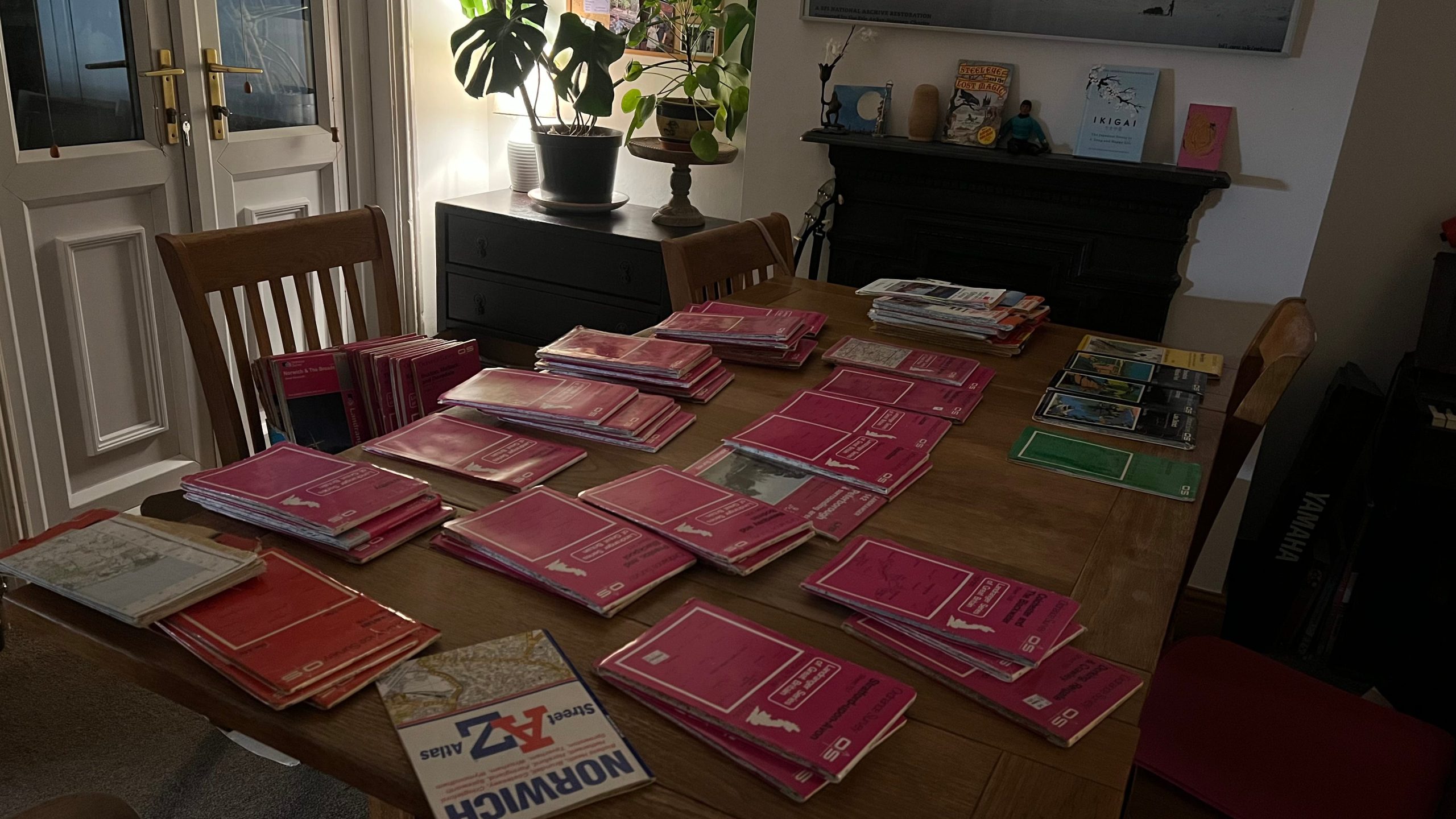
When I got home I felt the need to organise my collections of maps, unused notebooks and stationery. I had a feeling that these items were becoming important. A voice inside me whispered something about going on a trip, a journey, and that we would be needing these things along the way...

October Bricolage

Old Normal

There is no News